Most pre-wedding shoots are planned from a phone full of saved reels: the same fort, the same hand-holding pose, the same sunset. Then the day comes and the light is harsh, the site guard stops the tripod at the gate, and a four-hour plan runs into the night.
A good couple shoot starts somewhere else: a place that means something to you, the right light for it, and a clear deal with the photographer.
In this guide, we'll break down:
- pre wedding shoot ideas, by the kind of place;
- when the light is right, and why it matters;
- what to wear and what to bring;
- shooting at a monument, and flying a drone;
- what to agree with the photographer before you book.
It's for couples planning a pre wedding photoshoot, and for the family helping them pick the place.
On this page
Pre wedding shoot ideas, by place
A heritage spot in your city
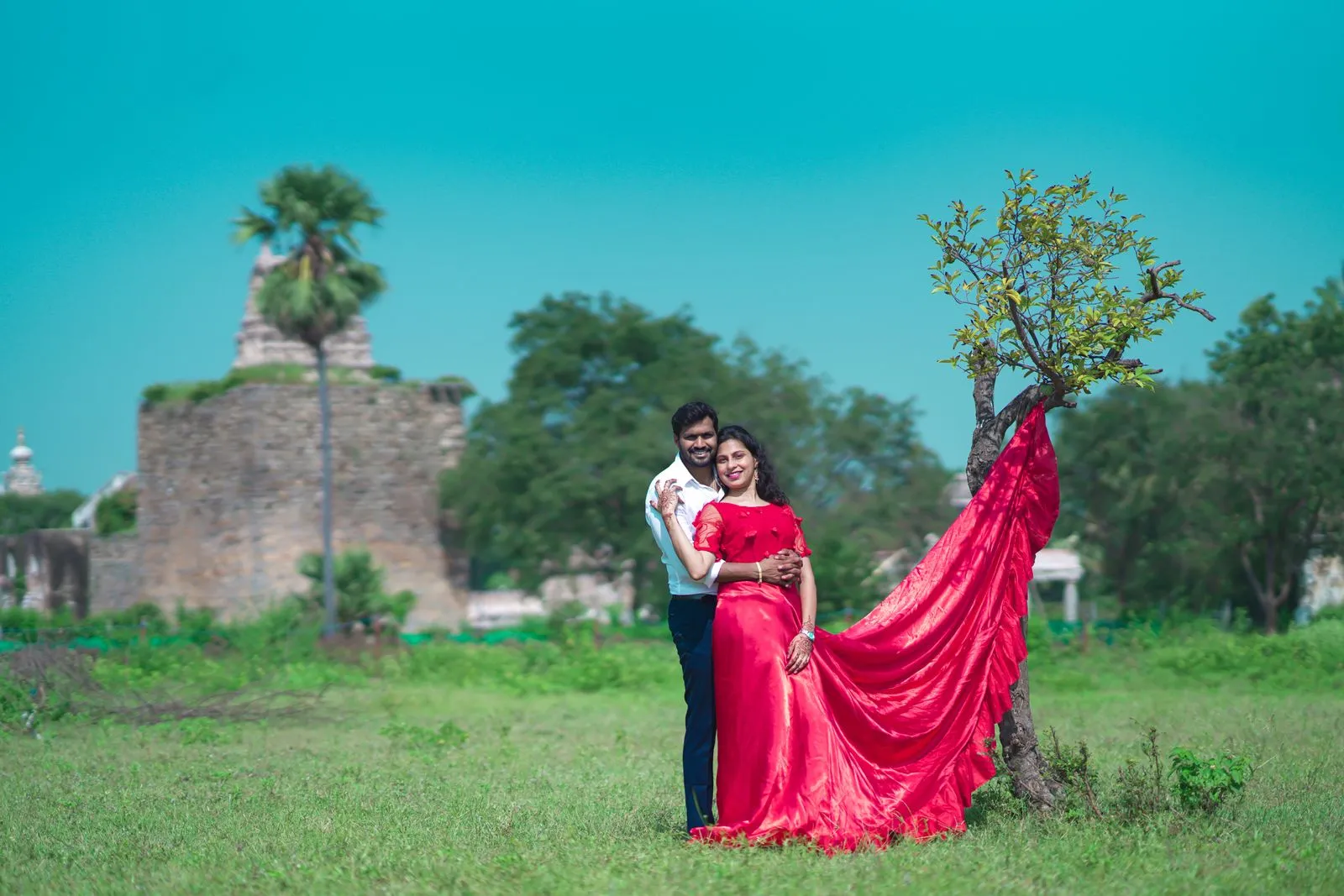
An old fort, a stepwell, a palace garden or the old city's lanes give a shoot a sense of where you're from. Go early, before the crowds, and check the site's rules before you plan (more on monuments below).
A garden, a lake or the riverside
Open places with trees and water make soft backgrounds and leave room to walk and talk. Check with the park or the authority that runs it whether a photo shoot needs permission or a fee.
Home and family
The terrace where you grew up, your parents' kitchen, the street you both know. A shoot at home can be the most personal one, and it needs no permit. Bring the family into a few frames.
The wedding venue
Shooting at the venue before the day helps the photographer learn its light and corners, and gives you a feel for the place. Ask the venue for a quiet slot.
A trip to the hills or the beach
A short trip gives the shoot a story: the drive, the place, the two of you. It also adds travel, a stay and weather to plan around, so pick a season that suits the place.
Your own story
Unique pre wedding shoot ideas come from your own story: the café where you met, the cricket you both play, a song you both know. Props that mean something to you, a letter, a scooter, your first gift, beat any trend.
The light: shoot in the golden hour
The golden hour is the short spell shortly after sunrise and before sunset, when the sun is low and the light is soft and warm. The blue hour is the twilight just before sunrise or after sunset, when the sky is a deep blue. Midday light is harsher, so keep the main frames for these two windows.
Example: if sunset is at 6:10 pm, be in your first outfit and in place by about 5 pm, so the light is at its softest while you're ready, not while you're changing.
What to wear and bring
- One outfit for each place you shoot. A second look adds variety on a longer shoot; more changes mean less time in good light.
- Clothes that suit the place: something traditional for a fort or a haveli, something easy to move in for a beach or a hill.
- Makeup for the camera. Our HD vs airbrush makeup guide explains what your artist will use, and why it matters close up.
- A small kit: water, safety pins, a comb, comfortable shoes for walking between spots, and the props you picked.
Shooting at a monument, and flying a drone
At monuments protected by the Archaeological Survey of India, you can take photos with a handheld camera, except in a few places such as the Taj Mahal's mausoleum. A tripod or stand, extra lights, a drone, or filming with special arrangements needs the ASI's written permission, and the ASI's draft rules also list commercial shoots. The rules don't name pre-wedding shoots, so ask the site's ASI office before you plan one there.
For a drone, ask your photographer whether it's registered on the government's Digital Sky platform and whether the place is in a green zone on the airspace map: red zones are no-drone zones. At a protected monument, a drone still needs written permission.
What to agree with the photographer
- How many hours, and how many places, with the travel time between them.
- How many edited photos you get, and when.
- Whether a short video or reel is included, and how long it is.
- Who arranges any permission or entry for the places you pick.
- Where you and the photographer may use the photos: your invitation, your social media, their portfolio.
Put it in writing. Shoots run long, and it helps to know what happens if one does.
Planning the shoot with Brideshala
- Use the photos on the invitation: our wedding card matter guide has the wording to go with them.
- Make your couple name for the reel with our couple name combination tool, and a hashtag with our wedding hashtag generator.
- Fit the shoot into the plan with our wedding planning checklist.
When you're ready to ask photographers for rates, tap Get free quotes at the top of the page (on a phone, it's in the menu), and our team finds up to three who fit. They get back to you directly.
Pick the place, then the time
Choose a place that means something to you, check its rules, book the golden hour, and agree the details in writing. The photos will look like you, not like everyone's feed.
Questions families ask
When should we do the pre-wedding shoot?
A few months before the wedding, so the photos are ready if you want them on the invitation or at the venue. Popular places get crowded in the wedding season, so book the photographer and the date early.
Can we do a pre-wedding shoot at a monument?
At monuments protected by the Archaeological Survey of India, handheld photography is allowed, except in a few places such as the Taj Mahal's mausoleum. Tripods, extra lights, drones and filming with special arrangements need written permission, so ask the site's ASI office first.
What time of day suits a pre-wedding shoot?
The golden hour, shortly after sunrise or before sunset, when the light is soft and warm. The blue hour, just before sunrise or after sunset, suits a few evening frames. Avoid the midday sun.
How many outfits do we need for a pre-wedding shoot?
One for each place you shoot. A second look adds variety on a longer shoot, but every change takes time out of the good light.
Can we fly a drone at our pre-wedding shoot?
Ask your photographer whether the drone is registered on the Digital Sky platform and whether the place is in a green zone on the airspace map. Red zones are no-drone zones, and at a protected monument a drone needs written permission.
What should we agree with the photographer?
The hours and places, the number of edited photos and when you get them, whether a reel is included, who arranges any permission, and where each of you may use the photos. Put it in writing.
Written by Sunny Kumar
Founder of Brideshala, Delhi. Sunny Kumar builds Brideshala, a directory of wedding venues and vendors across India, with every vendor's rate on the page.
All guides by Sunny →How we wrote this
Written from public rules and common wedding practice across India. Sources:
- Ancient Monuments and Archaeological Sites and Remains Rules, 1959, rules 2, 41 to 44 (photography, camera stands and lights, filming licences), via asi.nic.in
- Press Information Bureau, 12 July 2018: photography allowed at centrally protected monuments except three (Ajanta Caves, Leh Palace, the Taj Mahal's mausoleum)
- Archaeological Survey of India: draft do's and don'ts for protected monuments and sites (drones, tripods, filming and commercial shoots need written permission)
- Press Information Bureau, 26 August 2021: the Drone Rules, 2021 (green, yellow and red zones; the Digital Sky platform)
- Nikon: making the most of the golden hour
- NASA, Astronomy Picture of the Day, 11 October 2019: Earth at blue hour
- ThePrint, 10 July 2026, Manisha Mondal: pre-wedding shoots in India (crowded sites in the season; photos for invitations and decor)
- Bridebook: planning a pre-wedding photoshoot (what to ask the photographer: hours, edited images, usage, permits)
No venue paid to be in this guide. Spotted a mistake? Tell us.
Found it useful? Send it to family.
WhatsAppMore guides
HD vs Airbrush Makeup: Which Suits a Bride?
HD and airbrush aren't rival looks: one is a set of products, the other a way of putting them on. Here's what changes for a bride.
Wedding Card Matter in English, With Samples
A wedding card is printed once and read by everyone. Here's what goes on it, in order, with samples in English to edit and a check before you print.
Wedding Photographer Cost: Rates and Packages
Families compare photographers by the day rate, then pay for a second day, the other side, a bigger album and the crew's travel.