The haldi ceremony looks simple: turmeric paste, the family, a lot of laughing. Then the questions start. Which day? Who puts it on first? Will the venue charge for a yellow floor? And what if the bride's skin turns red two days before the wedding?
Plan it like any other function: a date, a place that can take the mess, a paste you've tested, and the elders ready with the first bowl.
In this guide, we'll break down:
- what the haldi ceremony is and what it means;
- what it's called, and how it changes, across India;
- what goes in the haldi paste, and the patch test;
- how it's done, step by step, and when to hold it;
- what to wear, and how to keep the stains off you and the venue.
It's for the family hosting the haldi, at home or at a venue, and for the bride or groom getting it.
On this page
What is the haldi ceremony?
The haldi ceremony is the ritual where the family rubs a paste of turmeric on the bride and the groom before the wedding. Haldi is the Hindi word for turmeric. In most traditions it's held separately, at the bride's home and at the groom's. In Punjabi families it's also called mayian, vatna or ubtan, after the paste.
The haldi ceremony's meaning and significance come from turmeric itself, which is held sacred and auspicious in Hindu custom. The paste is meant to cleanse and bless, to give the skin a glow before the wedding, and, as many families believe, to keep evil away from the couple. In Bengal the ritual is described as a beautifying and blessing ceremony, with roots going back to Vedic times.
The haldi ceremony across India
The idea is the same everywhere: turmeric, family, blessings before the wedding. The name, the paste and the day change by region and community.
| Where | What it's called | What's different |
|---|---|---|
| Punjab | Mayian, vatna, ubtan | Turmeric, flour and mustard oil, rubbed on by the married women of the family, led by the mother, a day before the wedding |
| Bengal | Gaye holud (gatra haridra, adhivas) | Three, five or seven days before; the turmeric typically comes from the groom's home |
| Bihar and Jharkhand | Haldi | Two days before; the bride's haldi comes from the groom's house, and the groom's from the bride's |
| Gujarat | Pithi | Named after the paste: turmeric, sandalwood and rose water, at each home |
| Marwari families | Pithi dastoor | Turmeric and sandalwood paste; after it, the couple stay home until the wedding |
| Tamil Nadu | Mangala snanam | On the morning of the wedding, at each home, with turmeric, sandalwood, oils and milk |
| Telugu families | Pellikuthuru, pellikoduku | Begun by the elder married women; the paste, nalugu, is sandal, turmeric and coconut oil |
Haldi ceremony ingredients: what goes in the paste
At its simplest, turmeric and besan (gram flour), with something to bind them: rose water, milk or curd. Families add sandalwood, mustard oil or coconut oil, by region and habit. Use plain turmeric powder, or whole turmeric ground at home, as your family prefers.
Our vivah samagri list has the haldi items, haldi, chandan powder, besan, gulab jal and dahi, in English and Hindi.
Do a patch test a few days before. Put a little of the same paste on the inside of the arm. Turmeric is a known contact allergen: in an Indian patch-test study, 11 of 300 patients reacted to it.
How the haldi ceremony is done, step by step
1. Set up the place
Mix the paste fresh, in a wide bowl or a few small ones, so several people can apply it at once. Seat the bride or groom where the floor is covered, with the family around.
2. The elders begin
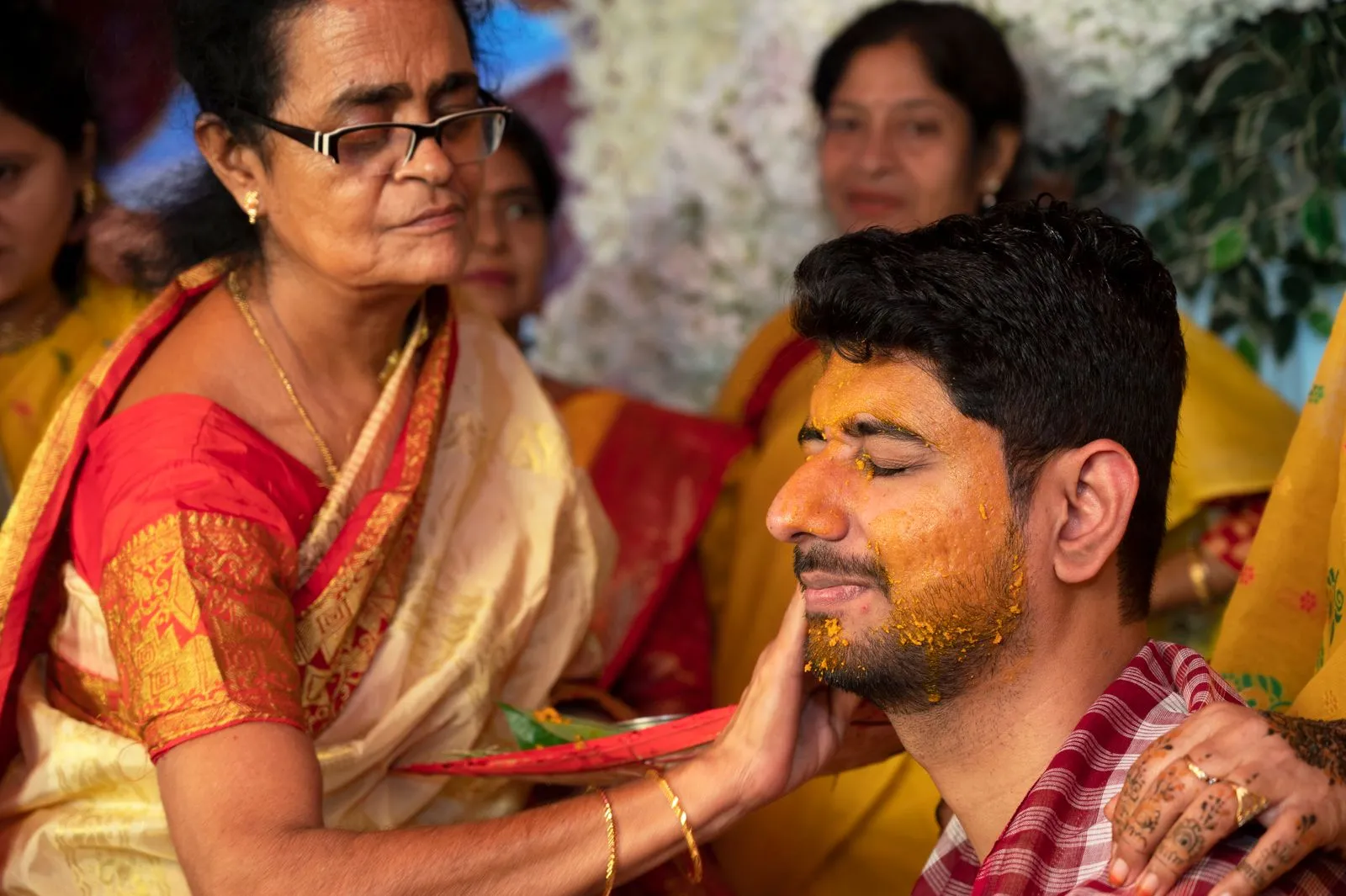
The mother, the grandmother and the other elders go first, then the younger relatives and friends. In Punjabi families it's the married women of the household, led by the mother; in Telugu families, the elder married women begin.
3. The paste and the blessings
Each one rubs a little paste on the bride or groom, with a blessing. Expect turmeric on everyone nearby.
4. The bath, and after
Then the paste is washed off with a bath. In Marwari, Punjabi and Bihari families, custom keeps the bride and groom at home from the haldi until the wedding.
When to hold the haldi ceremony
Anywhere from a week before to the morning of the wedding, by region: three, five or seven days before in Bengal, two days before in Bihar, a day before in Punjabi families, and on the wedding morning for mangala snanam in Tamil Nadu. Ask your family elders which day yours keeps.
Example: for a Sunday night wedding in a family that keeps haldi a day before, the haldi is Saturday morning. If the mehndi is Saturday evening too, book the venue for the whole day, and tell it there'll be turmeric.
What to wear, and how to keep the stains off
- Clothes you don't mind ruining. Turmeric stains fabric, so wear something old, or yellow so the marks don't show. Marwari brides traditionally wear yellow or orange for it.
- Hair up, nails covered. Tie the hair in a bun, and put petroleum jelly on the nails so they don't turn yellow.
- Cover the floor. Ask a venue about its haldi rules before you book: turmeric stains floors and furniture, and the venue may charge you for the cleaning. Lay old sheets where the paste will fall.
- After it's off: a witch hazel or alcohol toner helps lift the yellow from skin. For clothes, soak the stain in cold water first, and dry white clothes in the sun.
Planning the haldi with Brideshala
- Write the invitation with our invitation message maker. Pick Haldi, and it writes the card text and the WhatsApp message in English, Hindi or Hinglish.
- Find lines for the photos with our wedding caption generator, which has a Haldi option.
- Plan the mehndi too, with our mehndi ceremony guide.
- Make one hashtag for all the functions with our wedding hashtag generator.
- Fit the haldi into the rest of the plan with our wedding planning checklist, and see where it sits among the other functions in our Hindu wedding rituals guide.
When you're ready to ask vendors for rates, tap Get free quotes at the top of the page (on a phone, it's in the menu), and our team finds up to three who fit. They get back to you directly.
Keep it yellow, keep it easy
Fix the day with your elders, cover the floor, do the patch test, and hand the first bowl to the grandmothers. The rest is laughter and turmeric.
Questions families ask
What is haldi called in English?
Haldi is the Hindi word for turmeric, so the haldi ceremony is the turmeric ceremony. In Punjabi families it's also called mayian, vatna or ubtan, and in Bengal gaye holud.
How many days before the wedding is the haldi ceremony?
It depends on the region: three, five or seven days before in Bengal, two days before in Bihar, a day before in Punjabi families, and on the wedding morning in Tamil Nadu. Ask your family elders which day yours keeps.
Can the bride and groom have the haldi ceremony together?
Traditionally it's held separately, at each family's home. It can also be one joint function: gaye holud in Bengal is held either way.
Which haldi is used for the haldi ceremony?
Plain turmeric powder, or whole turmeric ground at home, mixed with besan and rose water, milk or curd. Families add sandalwood or oil by region.
Why is haldi applied before marriage?
Turmeric is held sacred and auspicious. The paste is meant to cleanse and bless the bride and groom, to give the skin a glow before the wedding, and, as many families believe, to keep evil away.
Is the haldi paste safe for the skin?
For most people, yes, but turmeric is a known contact allergen, and curcumin on the skin can cause hives or itching. Do a patch test with the same paste a few days before, and see a doctor if a rash comes up.
Written by Sunny Kumar
Founder of Brideshala, Delhi. Sunny Kumar builds Brideshala, a directory of wedding venues and vendors across India, with every vendor's rate on the page.
All guides by Sunny →How we wrote this
Written from public rules and common wedding practice across India. Sources:
- Wikipedia: Mayian (Punjabi haldi; citing Myrvold, Journal of Punjab Studies 11(2), and Kalsi, 1992)
- Wikipedia: Gaye holud (citing Fruzzetti, The Gift of a Virgin, 1982)
- Banglapedia: Gaye Halud (gatra haridra, adhivas; who applies it; three, five or seven days before)
- Palaniappan and Karthikeyan, "Turmeric: The Yellow Allergen", Indian Dermatology Online Journal, 2022
- Chaudhari, Tam and Barr, "Curcumin: A Contact Allergen", Journal of Clinical and Aesthetic Dermatology, 2015
- US National Center for Complementary and Integrative Health (NIH): Turmeric
- Pernia's Pop-Up Shop wedding encyclopedia: Pithi (Gujarat), Mangala Snanam (Tamil Nadu), Andhra Pradesh and Telangana, Haldi (Bihar and Jharkhand), Haldi (Punjab)
- MARWAR magazine, January–February 2018: Marwari wedding rituals (pithi dastoor), via esamskriti.com
- Orissa Post: why haldi is the first wedding ritual
- Brown Girl Magazine: a haldi ceremony survival guide (hair, nails, removing the yellow)
- Ariel India: removing curry stains from clothes
No venue paid to be in this guide. Spotted a mistake? Tell us.
Found it useful? Send it to family.
WhatsAppMore guides

Hindu Wedding Rituals Step by Step, in Order
A Hindu wedding is a string of rituals, each with its own people, things and time. Here they are in order, as a family plans them.
Tilak Ceremony: Meaning, Rituals and Items
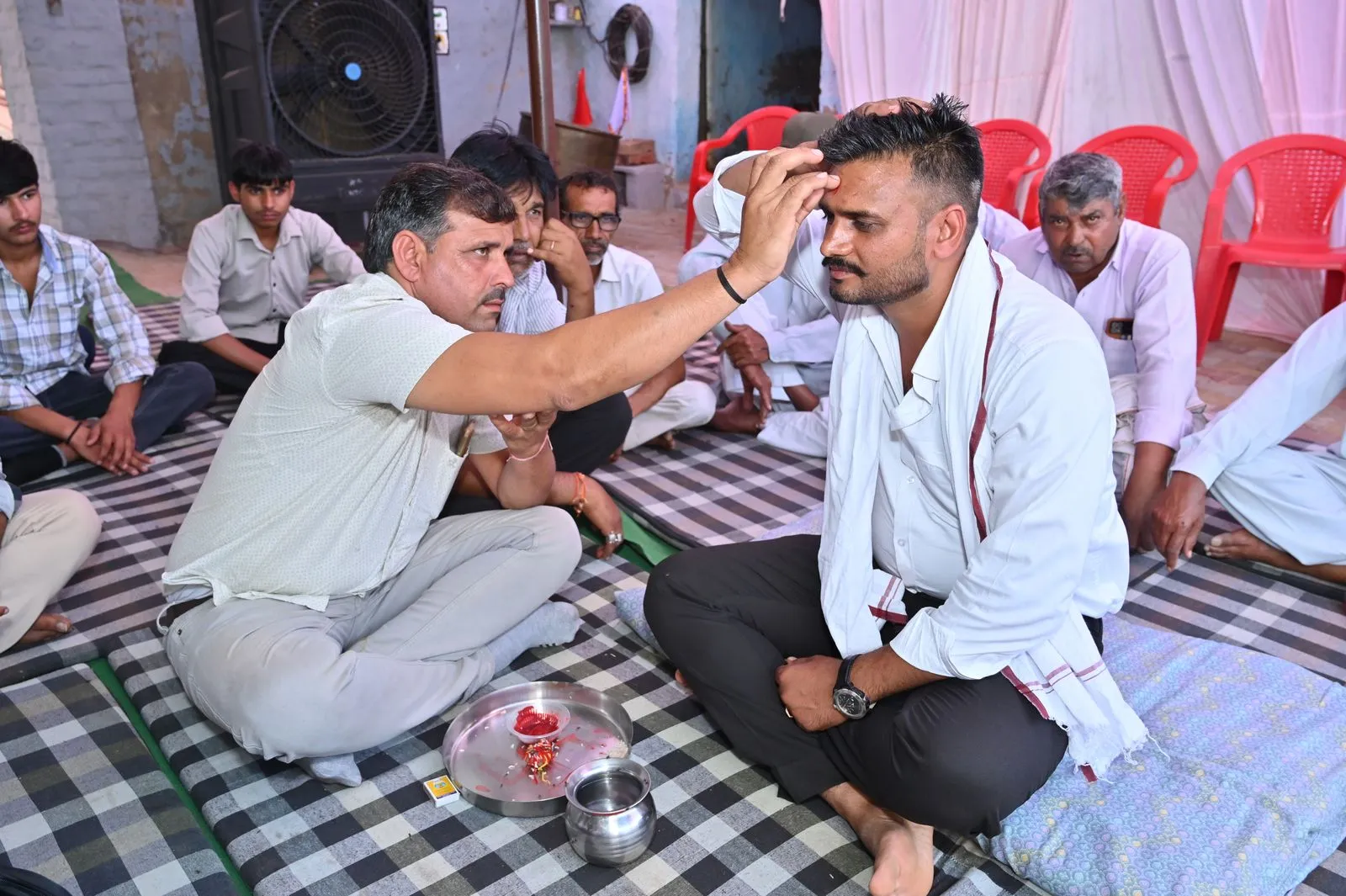
The tilak is the visit that seals the match: the bride's family marks the groom's forehead and blesses him. Here's what it means and how it's done.
Mehndi Ceremony: What It Is and How to Plan It
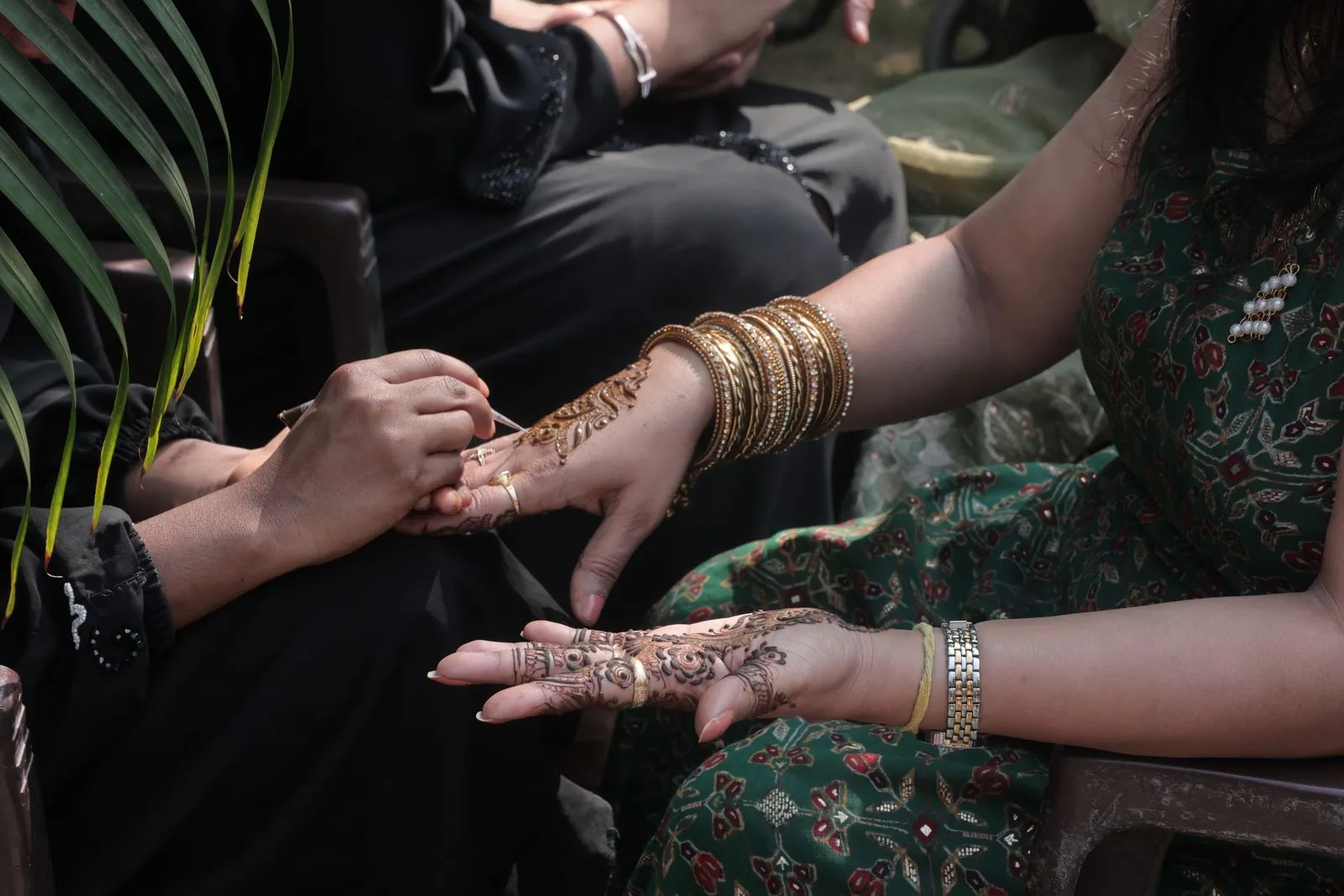
The mehndi runs on hours: the bride's design, the colour, the guests' queue. Here's what it means, how to plan it, and which cones to avoid.