The mehndi looks like the easy function: an artist, a box of cones, some music. Then it runs late. The bride's design takes hours, the cousins' queue runs into dinner, and someone's "instant black" cone leaves a rash two days before the wedding.
Plan it around three things: the bride's design first, enough artists for the guests, and natural henna only.
In this guide, we'll break down:
- what the mehndi ceremony is and what it means;
- how it differs across India;
- when to hold it, and how long the colour takes;
- how the mehndi ceremony runs, step by step;
- natural henna against "black henna", and why the difference matters.
It's for the family hosting the mehndi, and for the bride planning her own.
On this page
What is the mehndi ceremony?
The mehndi ceremony is the pre-wedding function where designs in henna paste are drawn on the bride's hands and feet. Henna comes from the plant Lawsonia inermis, and its colouring agent, lawsone, stains the skin orange-brown to reddish-brown. Mehendi is the other common spelling.
In many families the bride sits with her friends and the women of the family, or with a professional mehndi artist, on the evening before the wedding. The groom sometimes gets a simple design or a small mark. Hindu, Muslim, Sikh, Jain and Christian families in India all keep mehndi in their weddings.
Part of the mehndi ceremony's meaning is in the design itself: brides often hide the groom's initials in it, as a token of love. There's an old saying too: the darker the mehndi on the bride's hands, the more her mother-in-law-to-be will love her. It's a saying, not a promise, but it's why so many brides want the colour as dark as it will go.
The mehndi ceremony across India
- Punjabi weddings: the mehndi is on the evening before the wedding, after the days of maiyan, when the bride is rubbed with vatna. In the evenings before, the women of both families gather to sing: suhag at the bride's home, ghorian at the groom's.
- Muslim weddings: the mehndi is held a day or two before the wedding, as a close function from the bride's side, after the manjha.
- Bengali weddings: the traditional order has no separate mehndi night. The turmeric comes at the gaye holud, and alta, a red dye, marks the bride's feet.
For the turmeric functions, see our haldi ceremony guide, and for where the mehndi sits among the other functions, our Hindu wedding rituals guide.
When to hold the mehndi
A day or two before the wedding; many families hold it on the evening before. That gives the colour time: the red-brown shade appears only several hours after the paste goes on, and the longer the paste stays on, the darker the stain.
Haldi or mehndi first? It varies by family. In the Punjabi order, the turmeric days come before the mehndi evening; ask your elders what yours keeps.
Example: say the bride's design takes five hours. If the artist starts at 3 pm, the bride is done by 8 pm, and the paste can stay on through the night while the guests take their turn.
How the mehndi ceremony runs, step by step
1. The bride's design first
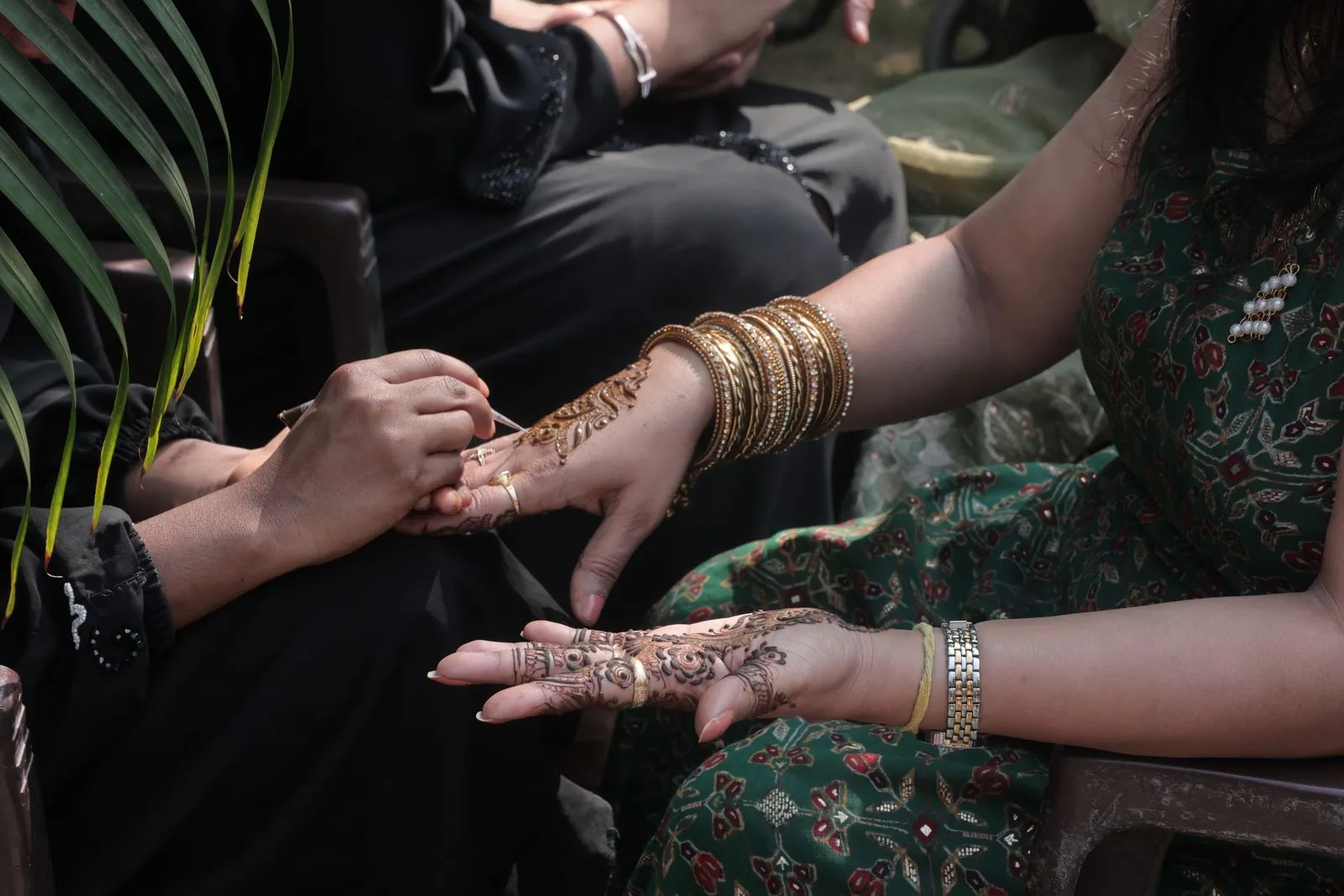
Start with the bride: a full bridal design can take several hours. Agree on the design before the day, ask the artist how long it needs, and decide whether the groom's initials go in.
2. Then the family and the guests
Book enough hands for the queue: one artist for the bride, and another for the family and guests. Ask for the rate for guests, by the hand or by the person.
3. Music and food
Songs, a dholak or a DJ keep the evening going while the paste dries. Serve food that's easy to eat for people whose hands are covered in henna, and keep someone ready to feed the bride.
4. Letting it dry
Keep the paste on for some hours: the longer it stays, the darker the stain. Lemon juice is one of the traditional additions to henna, and our vivah samagri list has nimbu and cheeni with the mehndi items.
Natural henna or "black henna"
Natural henna stains orange-brown to reddish-brown, never black. A cone that promises a jet-black or instant dark stain may contain PPD (para-phenylenediamine), a hair-dye chemical. The US Food and Drug Administration says PPD isn't permitted in cosmetics meant for the skin, and it has had reports of skin injuries from products sold as henna and "black henna".
- What PPD can do: DermNet, the dermatology reference, says high concentrations of PPD can cause intense blistering, followed by lighter patches or scarring, and a lifelong allergy to PPD is likely. A reaction can show up days after the mehndi.
- What to do: ask the artist what's in the cones, skip any "instant" or black cone, and see a dermatologist if a rash or blisters come up.
- Pure henna is relatively safe, and allergic reactions to it are rare.
Planning the mehndi with Brideshala
- Write the invitation with our invitation message maker. Pick Mehendi, and it writes the card text and the WhatsApp message in English, Hindi or Hinglish.
- Find lines for the photos with our wedding caption generator, which has a Mehendi option.
- Fit the mehndi into the rest of the plan with our wedding planning checklist.
When you're ready to ask vendors for rates, tap Get free quotes at the top of the page (on a phone, it's in the menu), and our team finds up to three who fit. They get back to you directly.
Plan the hours, not just the day
Fix the evening, book the bride's artist first and a second one for the guests, and buy natural henna only. The colour does the rest overnight.
Questions families ask
What happens at a mehndi ceremony?
Designs in henna paste are drawn on the bride's hands and feet, usually by a mehndi artist, with the women of the family and her friends around, music and food. The family and guests often get small designs too.
How many days before the wedding is the mehndi?
A day or two before. Many families hold it on the evening before the wedding, which gives the colour the night to come up.
Is the mehndi ceremony only for women?
It's mostly the women of the family and the bride's friends, but the groom sometimes gets a simple design or a small mark too.
Haldi or mehndi: which comes first?
It varies by family. In the Punjabi order, the turmeric days come before the mehndi evening. Ask your elders which order yours keeps.
How long should bridal mehndi stay on?
Some hours: the longer the paste stays on, the darker the stain, and the red-brown shade appears only several hours after it goes on.
Is black mehndi safe?
No. Natural henna is never black. A black or "instant" cone may contain PPD, a hair-dye chemical that can cause blisters, scarring and a lifelong allergy. Use natural henna only.
Why do brides hide the groom's name in their mehndi?
It's a custom: the groom's initials are woven into the bride's design as a token of love.
Written by Sunny Kumar
Founder of Brideshala, Delhi. Sunny Kumar builds Brideshala, a directory of wedding venues and vendors across India, with every vendor's rate on the page.
All guides by Sunny →How we wrote this
Written from public rules and common wedding practice across India. Sources:
- Gopinath et al., "For the love of colour: plant colours and the dermatologist", Indian Journal of Dermatology, Venereology and Leprology, 2020 (Lawsonia inermis, lawsone, lemon juice, longer on the skin gives a darker colour)
- Myrvold, "Wedding Ceremonies in Punjab", Journal of Punjab Studies 11(2), 2004 (the mehndi evening, the mother-in-law saying, the groom's mark, suhag and ghorian, maiyan)
- Cincinnati Art Museum: Indian wedding rituals lesson plan (the mehndi a day before the wedding; the groom's initials)
- Culturally Situated Design Tools (NSF-funded): henna in India (mehndi across faiths)
- WeddingSutra: Muslim wedding traditions (the mehndi a day or two before; the manjha; initials as a token of love)
- Wikipedia: Bengali Hindu wedding (gaye holud; alta)
- Wikipedia: Mehndi (the spelling mehendi; initials in the design)
- US Food and Drug Administration: Temporary tattoos, henna/mehndi, and "black henna" fact sheet
- DermNet: allergy to paraphenylenediamine
- Panfili et al., Italian Journal of Pediatrics, 2017 (reactions to black henna; onset days after)
- American Journal of Tropical Medicine and Hygiene, 2016 (pure henna relatively safe; the colour appears hours after)
- India TV, 16 September 2025: dermatologists on adulterated mehendi cones
No venue paid to be in this guide. Spotted a mistake? Tell us.
Found it useful? Send it to family.
WhatsAppMore guides
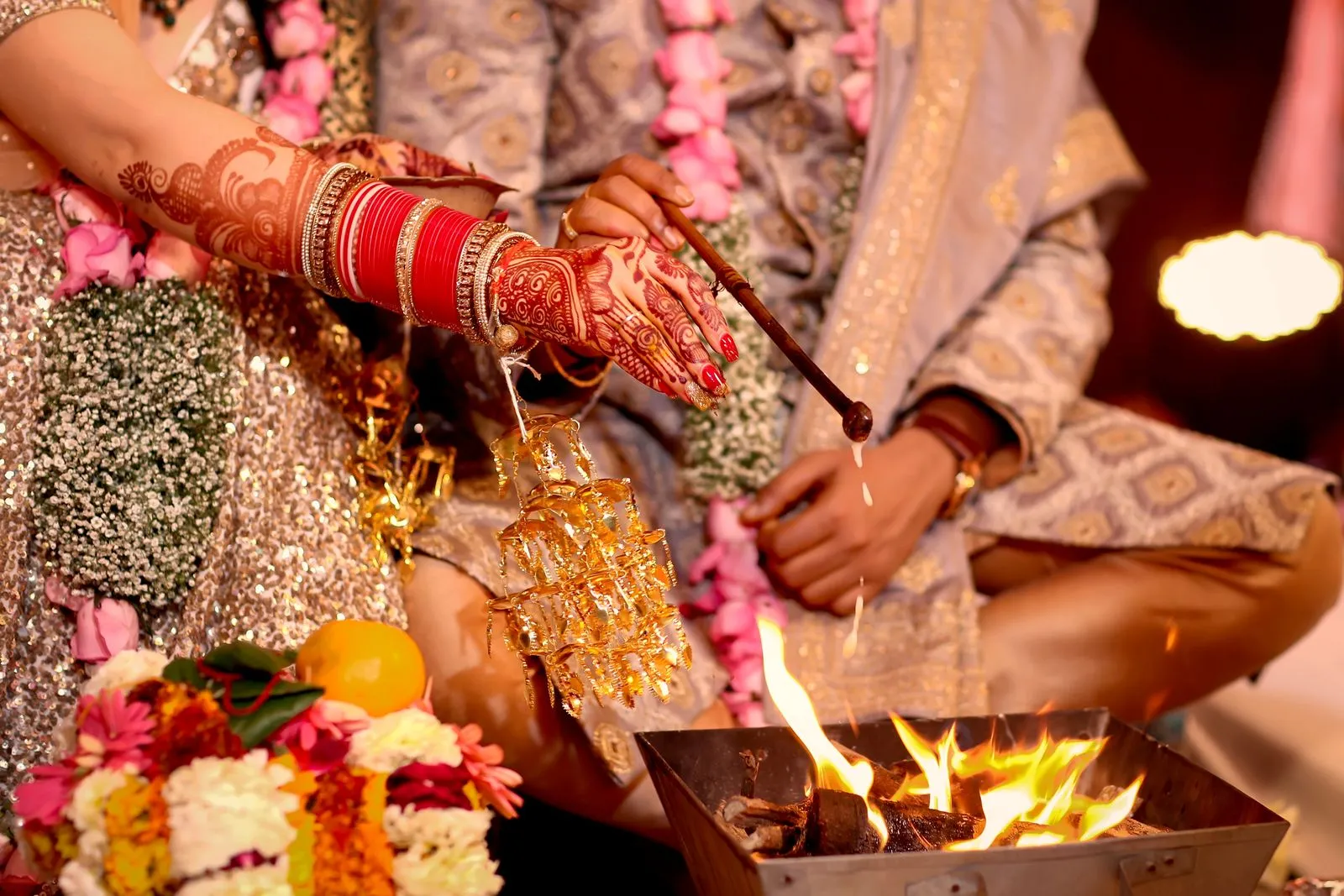
Hindu Wedding Rituals Step by Step, in Order
A Hindu wedding is a string of rituals, each with its own people, things and time. Here they are in order, as a family plans them.

Sangeet Ceremony: Meaning and How to Plan It
The sangeet runs on rehearsals, a running order and a 10 pm cut-off. Here's what it means, where it comes from and how to plan the night.
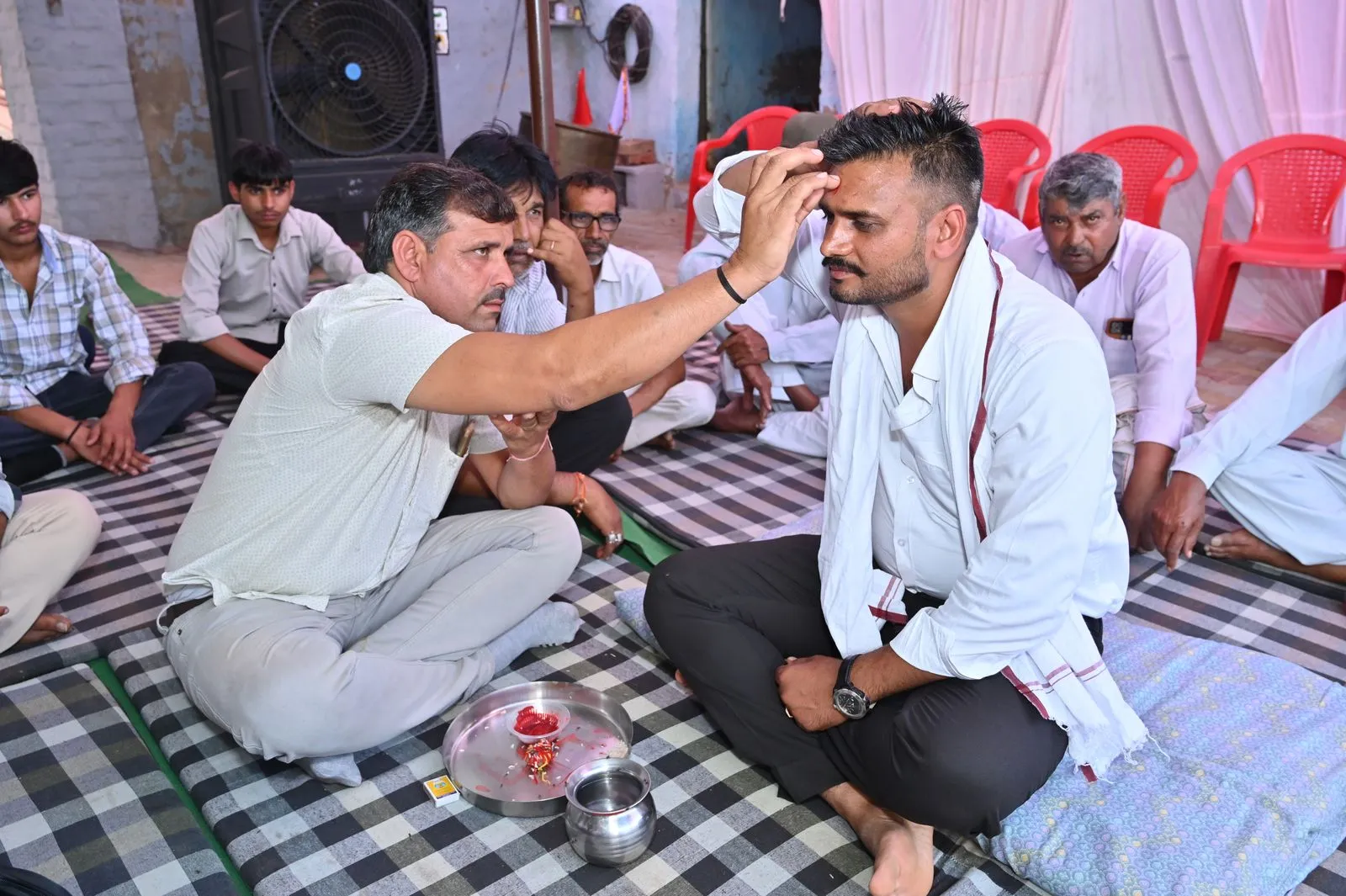
Tilak Ceremony: Meaning, Rituals and Items
The tilak is the visit that seals the match: the bride's family marks the groom's forehead and blesses him. Here's what it means and how it's done.