In many families the tilak is the first big function of the wedding, and the first time the two families host each other. The questions come at once: who goes, on which day, what goes on the thali, and how the groom's family should receive the guests.
Treat it as the two families' first formal meeting: the right people, a short puja, the tilak itself, the blessings and a meal.
In this guide, we'll break down:
- what the tilak ceremony is and what it means;
- where it's held, and how it differs;
- how it's done, step by step;
- the tilak ceremony items;
- when to hold it.
It's for the bride's family planning the visit, and for the groom's family hosting it.
On this page
What is the tilak ceremony?
The tilak ceremony is the visit where the bride's family goes to the groom's home and marks his forehead with a tilak, to accept him as the groom. The tilak is the mark itself, made with sandal paste, kumkum or vermilion, often with grains of rice pressed on it. The tilak ceremony's meaning is in that mark: a blessing, and a public sign that the two families have agreed to the match.
It's an old custom. A record of Bihar's village life from 1885 already describes the bride's father marking the groom's forehead with sandal paste before the marriage.
Where the tilak ceremony is held
- Bihar and Jharkhand: the tilak is one of the main functions before the wedding. The bride's party that goes to the groom's home has long been called the tilkahru.
- Rajasthan: the tilak is the engagement, the first of the wedding rituals.
- Punjab: at the kurmai, the engagement, the bride's father puts a tikka on the groom's forehead.
- Abroad: Bhojpuri-speaking families in Surinam have kept the tilak, with its own songs.
Our Hindu wedding rituals guide shows where the tilak sits among the other functions.
How the tilak ceremony is done, step by step
1. The welcome
The groom's family receives the bride's party at home. Traditionally the bride's father, brothers and other male relatives go, with the pandit; who goes varies by family.
2. The puja
The pandit performs a short puja, with a lamp lit, before the tilak. Ask your pandit what it needs, and set the place before the guests arrive.
3. The tilak
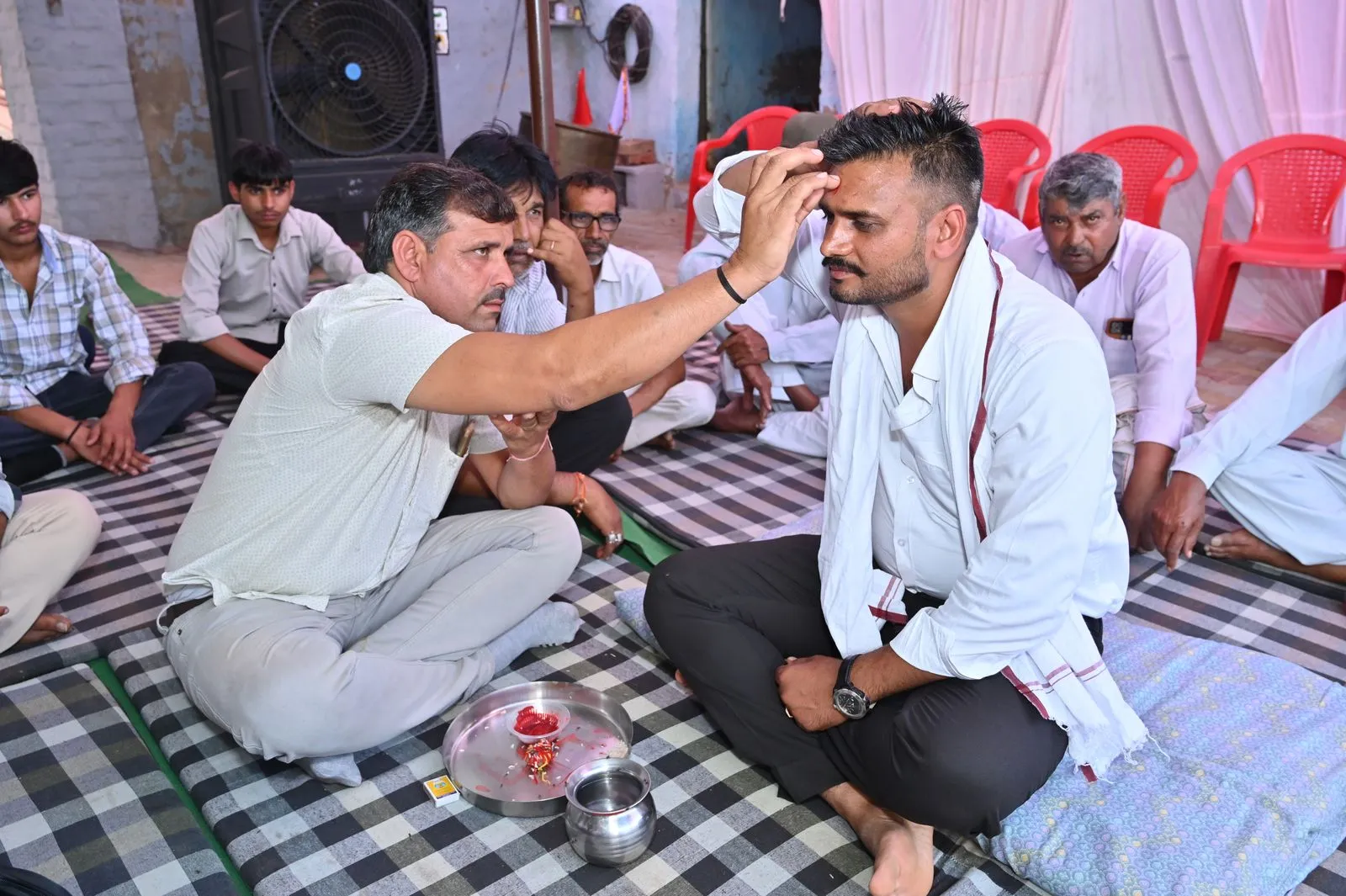
The bride's brother or father applies the tilak, vermilion and sandal paste, to the groom's forehead, and presses a few grains of rice on it.
4. Gifts
The two families exchange gifts. What is given, and by whom, differs from family to family. Whatever your custom, the law is plain: giving or taking dowry is a crime under the Dowry Prohibition Act, 1961, punishable with at least five years in prison.
5. Blessings, songs and a meal
The elders of both families bless the groom, there are songs, and the groom's family serves a meal before the bride's party leaves.
Tilak ceremony items
- Roli or kumkum, and chandan (sandal paste), for the tilak.
- Akshat: whole rice grains.
- A diya, for the puja.
- The tilak thaal to carry it all, with a coconut and mithai.
Our vivah samagri list has the tilak and sagai items, in English and Hindi. Check it with your pandit.
When to hold the tilak
Anywhere from months to days before the wedding, by family and region. Fix the day with your pandit, as you would the muhurat, and give the groom's family enough notice to host.
Example: if the wedding is on a Sunday in February and your family keeps the tilak a few days before, a Thursday tilak leaves the Friday and Saturday for the haldi and the mehndi.
Planning the tilak with Brideshala
- Plan the functions that follow with our haldi ceremony guide and mehndi ceremony guide.
- Find lines for the photos with our wedding caption generator; its Engagement option suits a tilak.
- Fit the tilak into the rest of the plan with our wedding planning checklist.
Keep it simple and on time
Fix the day with the pandit, agree who goes, set the thaal, and let the elders lead. The tilak is short; the welcome is what both families remember.
Questions families ask
What is the tilak ceremony?
The visit where the bride's family goes to the groom's home and marks his forehead with a tilak of vermilion and sandal paste, with grains of rice, to accept him as the groom. It's followed by blessings, songs and a meal.
Who goes to the tilak ceremony?
Traditionally the bride's father, brothers and other male relatives go to the groom's home, with the pandit. Who goes varies by family.
Who applies the tilak to the groom?
Usually the bride's brother or father.
When is the tilak ceremony held?
Anywhere from months to days before the wedding, depending on the family and the region. The pandit fixes the day.
What is the tilak ceremony in Bihar?
One of the main functions before a Bihari wedding. The bride's party, long called the tilkahru, goes to the groom's home, applies the tilak and blesses him, and the groom's family hosts them.
Is the tilak the same as the engagement?
In Rajasthan the tilak is the engagement. In other families the roka or sagai is a separate function, and the tilak follows it.
Written by Sunny Kumar
Founder of Brideshala, Delhi. Sunny Kumar builds Brideshala, a directory of wedding venues and vendors across India, with every vendor's rate on the page.
All guides by Sunny →How we wrote this
Written from public rules and common wedding practice across India. Sources:
- Grierson, Bihar Peasant Life (Bengal Secretariat Press, 1885), §1318 (the bride's father marking the groom's forehead with sandal paste; the tilkahru)
- Arya, Ritual Songs and Folksongs of the Hindus of Surinam (1968): the tilak and its stages (puja with a lamp, the tilak mark and blessing, gifts, departure)
- Wikipedia: Hindu wedding (Rajasthan: the tilak as the engagement)
- Wikipedia: Punjabi wedding traditions (the kurmai tikka), citing Babar and Cheema, South Asian Studies 38(2), 2023
- Wikipedia: Tilaka (what the mark is made of)
- Pernia's Pop-Up Shop wedding encyclopedia: tilak in Bihar and Jharkhand (the brother applies the tilak and rice; blessings and songs)
- Dowry Prohibition Act, 1961, section 3
No venue paid to be in this guide. Spotted a mistake? Tell us.
Found it useful? Send it to family.
WhatsAppMore guides
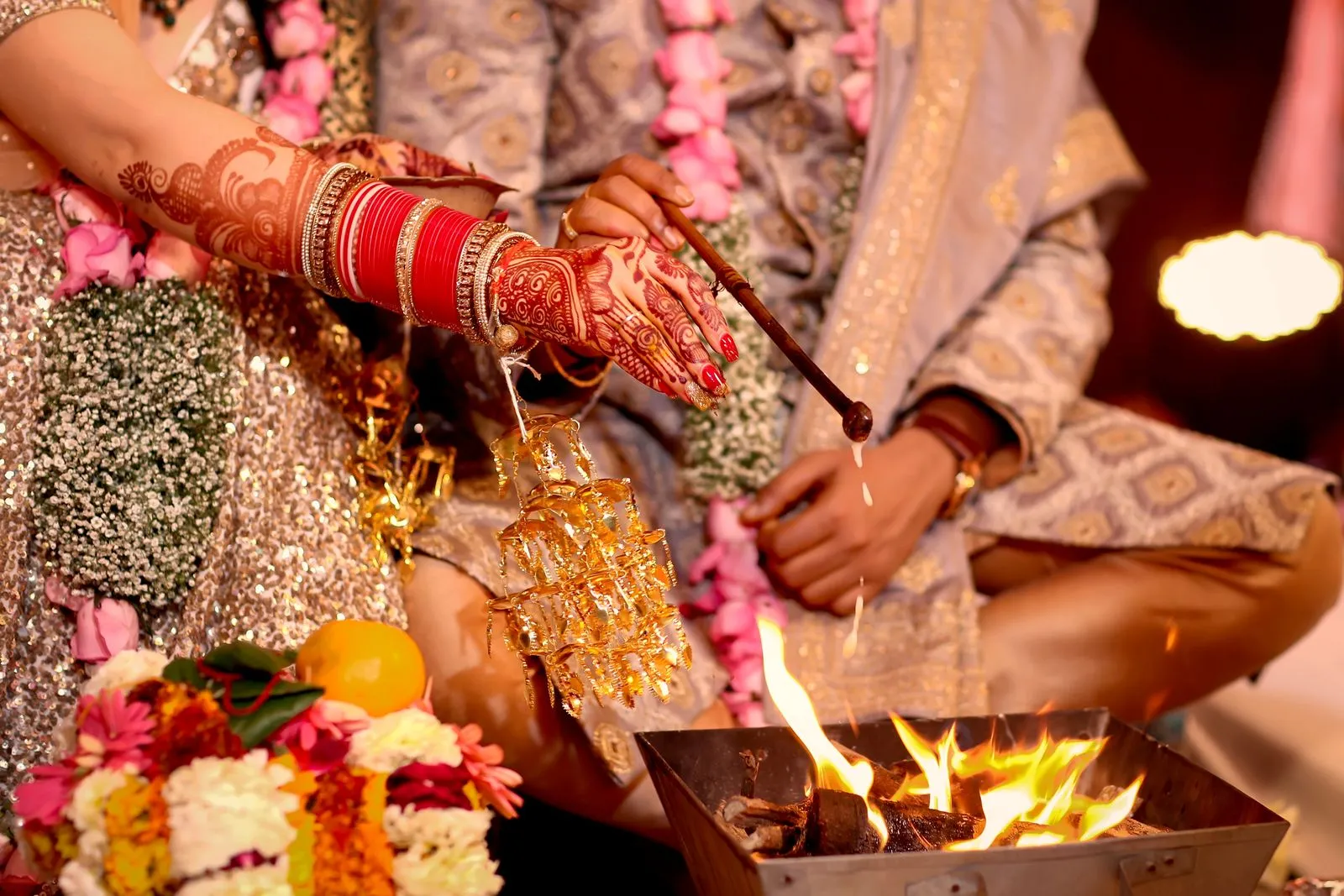
Hindu Wedding Rituals Step by Step, in Order
A Hindu wedding is a string of rituals, each with its own people, things and time. Here they are in order, as a family plans them.
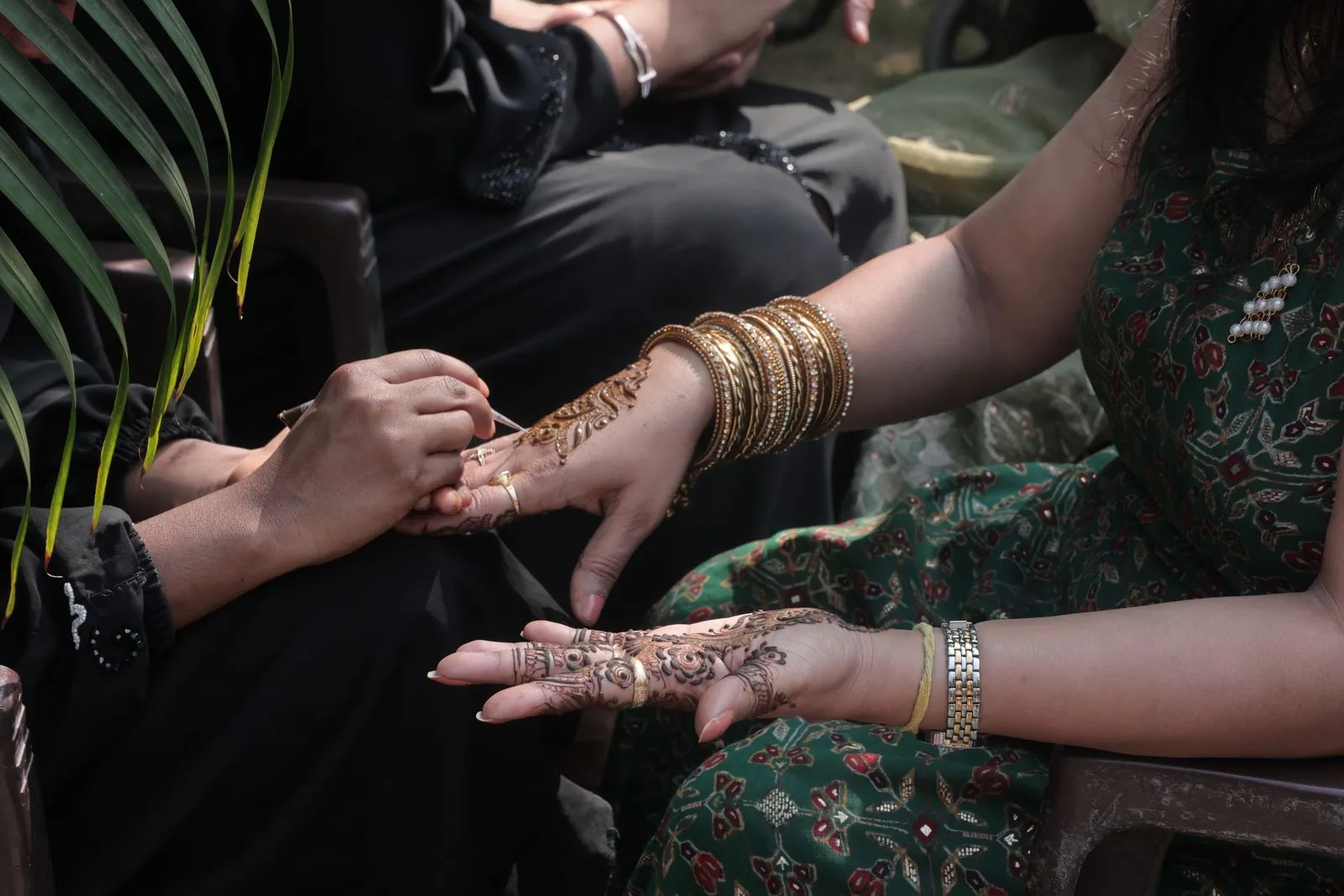
Mehndi Ceremony: What It Is and How to Plan It
The mehndi runs on hours: the bride's design, the colour, the guests' queue. Here's what it means, how to plan it, and which cones to avoid.
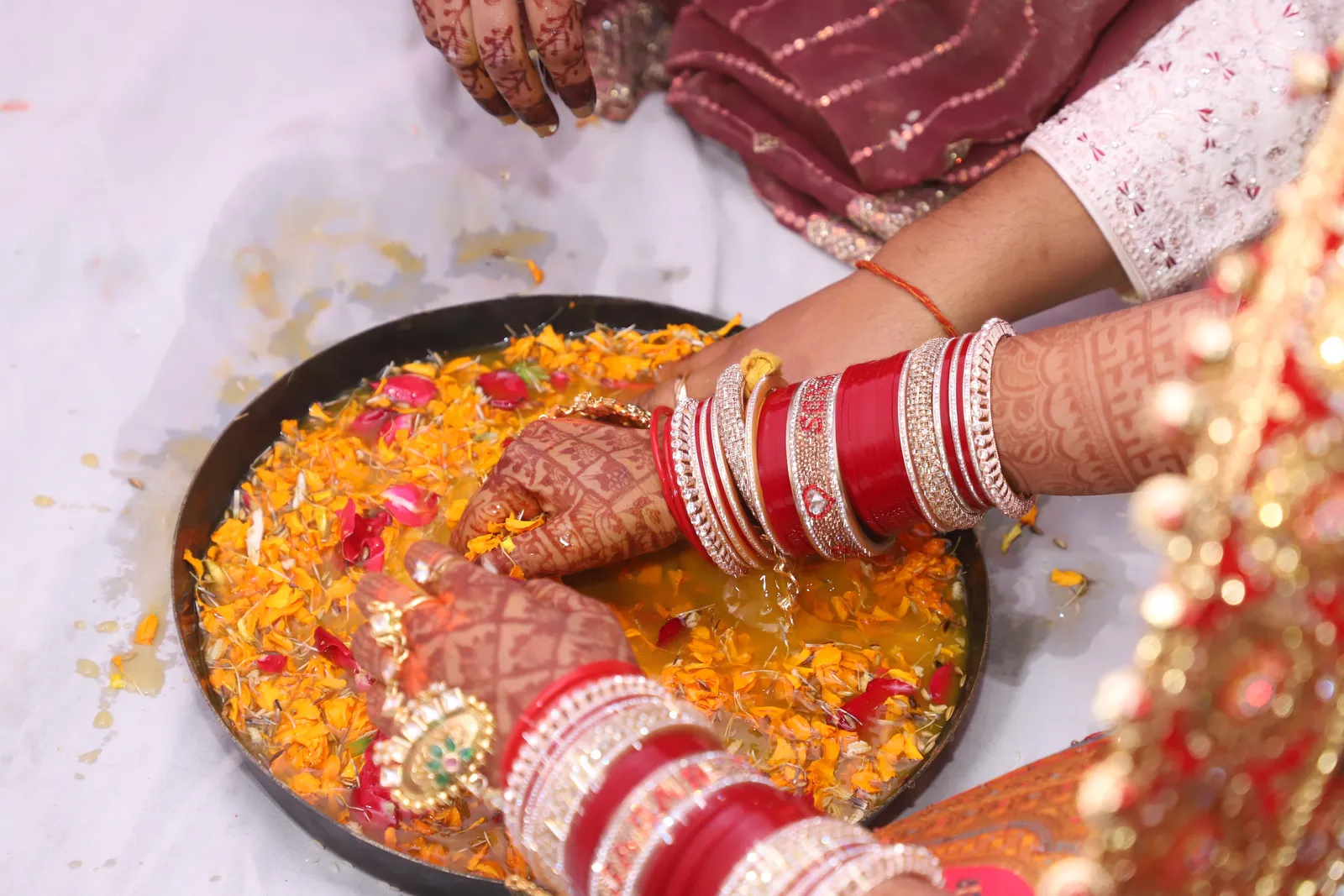
Joota Chupai: The Rasam and How It's Played
Joota chupai is the game where the bride's sisters hide the groom's shoes. Here's when it's played, how, and how to keep the bargaining friendly.