Kanyadaan means "the giving of a daughter": kanya is a daughter or a maiden, and daan is a gift. It's the ritual where the bride's parents place her hand in the groom's and give her in marriage, before the pheras.
On the day, it's also where time slips. The pandit names both families' gotras, the parents need to be in place with the lota and the plate, and the pheras still have to fall inside the muhurat. Plan it like the other rituals: who does it, what they need, and when it must start.
In this guide, we'll break down:
- what kanyadaan means, and where it falls in the wedding;
- how it's done, step by step;
- what the family arranges;
- who does it, and who can when the father can't;
- the jaimala, the exchange of garlands that comes before it.
It's for the bride's parents and family, and for anyone planning a Hindu wedding who wants to know what the kanyadaan is.
On this page
What is kanyadaan?
In Sanskrit, kanyadana is "the giving of a girl in marriage". The old texts on the samskaras describe it as the bride's guardian formally giving her to the groom, and the groom formally accepting her. Inscriptions from the Vijayanagara kingdom record the custom in the 15th century.
In many weddings the order runs: the baraat and the welcome, the jaimala, then the kanyadaan, the havan and the pheras. Our Hindu wedding rituals guide has the whole order, and your pandit will have your family's.
How kanyadaan is done, step by step
1. The sankalp and the gotras
The pandit names the gotra and forefathers of both families. Then the bride's father, or whoever gives her, speaks the sankalp: the statement that he is making this gift.
2. Joining the hands
The father places the bride's right hand in the groom's, as the pandit recites the mantras.
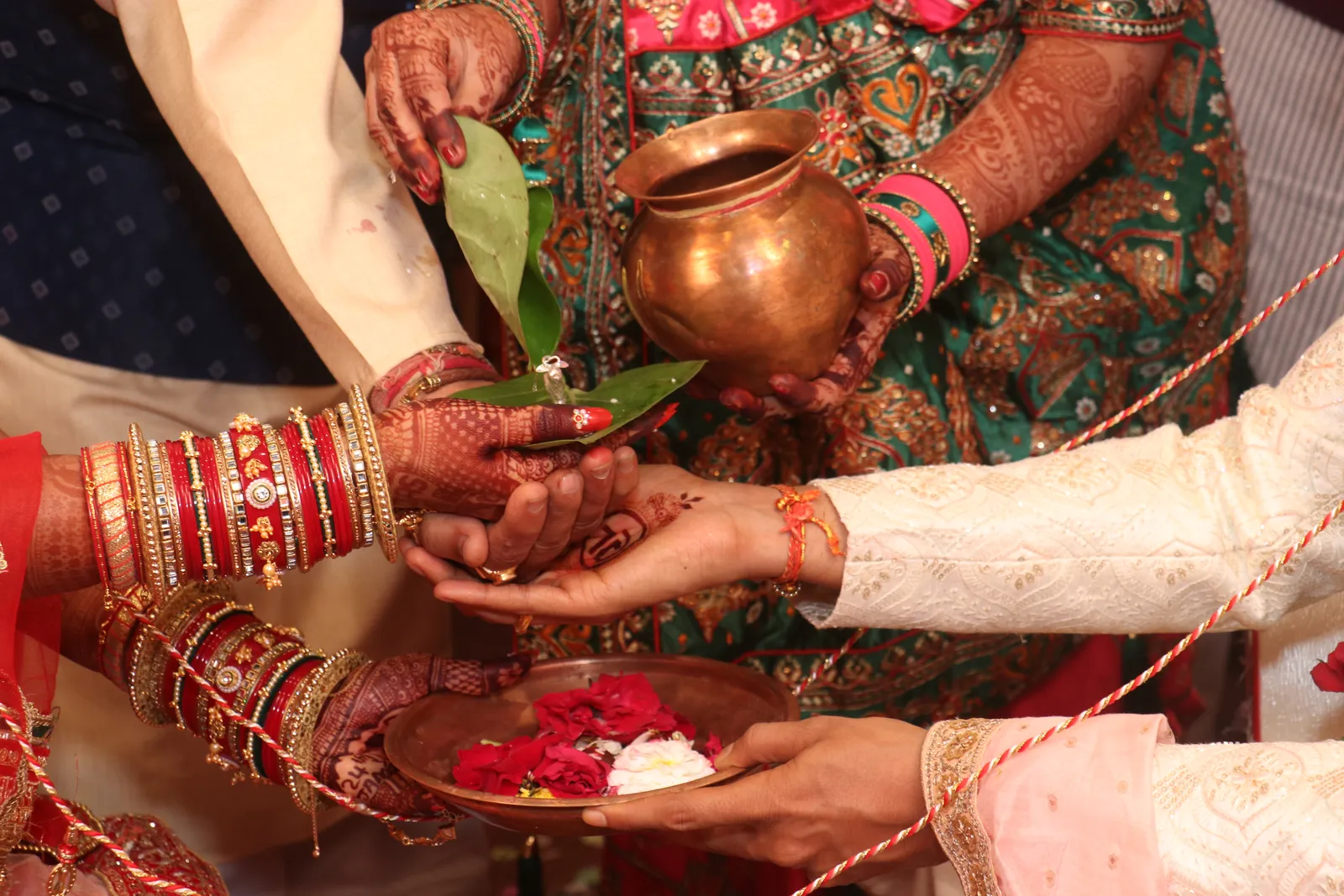 Photo: Bhumish143, CC BY-SA 4.0, via Wikimedia Commons
3. The water
The bride's mother pours water over the couple's palms. Then flowers, fruit and betel nuts are placed in their hands.
4. The groom's promise
The bride's father asks the groom not to fail her in dharma, artha and kama: in duty, in wealth and in love. The groom promises, three times.
5. The groom takes her hand
The groom takes the bride's hand, the panigrahan, and the havan and the pheras follow.
What the family arranges
- The items. Ask your pandit for the list. Our vivah samagri list has the kanyadaan set for several traditions: in its North Indian list, kush grass, black til, a copper lota, Ganga jal and the shagun.
- The people. Decide who gives the kanyadaan, and who sits beside them, before the day, and tell the pandit.
- The time. Ask the pandit how long the kanyadaan and the havan take, and work back from the muhurat on our shubh vivah muhurat page.
Example: say the muhurat for the pheras starts at 11:30 pm, and your pandit says the kanyadaan and the havan take 1 hour. Then the kanyadaan should start by 10:30 pm, with the jaimala and the baraat's welcome done before it.
Who does the kanyadaan?
Usually the bride's father gives her, and her mother pours the water. When the father can't, families turn to other relatives, and the old texts did the same:
- the Yajnavalkya Smriti names the father, then the grandfather, the brother, the kinsmen and the mother, each in the absence of the one before;
- the Narada Smriti names the father, the brother with the father's consent, the paternal grandfather, the maternal uncle and other relatives, and then the mother.
In news reports, mothers have performed it, and soldiers have done it for a fallen colleague's daughter. Some families change the words or leave the ritual out. Which way your family goes is for the family to decide with your pandit.
What the law asks is plain. Under section 7 of the Hindu Marriage Act, 1955, a Hindu marriage follows the customary rites of either side, and where those include the saptapadi, it's complete when the seventh step is taken. The Act doesn't name the kanyadaan.
Kanyadaan across India
- Tamil weddings: the kanyadaanam comes after the kashi yatra and the oonjal, the swing, and before the thali is tied and the saptapadi.
- Gujarati weddings: the hands are joined in the hast melap, before the mangal phera, the rounds of the fire.
- Maharashtrian weddings: the kanyadaan set in our samagri list includes the copper tambya, the wedding saree and the mangalsutra.
The jaimala, or varmala
In many weddings, before the kanyadaan, the bride and groom exchange garlands: the jaimala, also called the varmala. The exchange shows that they choose and accept each other.
Arrange two garlands and some flower petals, and a stage where the guests can see. Fix the jaimala's time in the plan too: when it comes before the kanyadaan, if it runs late, so does everything after it.
Planning the kanyadaan with Brideshala
- See where it sits among the other rituals in our Hindu wedding rituals guide, and plan the arrival with our baraat guide.
- Print the muhurat and the times on the card with our wedding card matter guide.
- Make the list of items with our vivah samagri list, and check it with your pandit.
Fix the who and the when
Decide who gives the kanyadaan, set the items out before the pandit asks for them, and start it on time for the muhurat. The rest is the moment itself.
Questions families ask
What is the meaning of kanyadaan in English?
Kanyadaan means "the giving of a daughter": kanya is a daughter or a maiden, and daan is a gift. It's the ritual where the bride's parents place her hand in the groom's and give her in marriage.
When is kanyadaan done?
In many weddings, after the jaimala and before the havan and the pheras, so it has to start in time for the pheras to fall inside the muhurat. Ask your pandit how long it takes.
Who does the kanyadaan?
Usually the bride's father places her hand in the groom's, and her mother pours the water over the couple's palms. When the father can't, another relative or the mother does it.
Can the mother do the kanyadaan?
Yes. The Yajnavalkya and Narada Smritis both name the mother among those who may give a daughter in marriage, and mothers have performed it. Agree it with your pandit.
Can a brother do the kanyadaan?
Yes. The Yajnavalkya Smriti names the brother after the father and the grandfather, and the Narada Smriti names the brother and the maternal uncle. Agree it with your pandit.
Is kanyadaan necessary for a Hindu marriage?
Under section 7 of the Hindu Marriage Act, 1955, a Hindu marriage follows the customary rites of either side, and where those include the saptapadi, it's complete when the seventh step is taken. The Act doesn't name the kanyadaan.
Are jaimala and varmala the same?
Yes: two names for the exchange of garlands between the bride and groom, which in many weddings comes before the kanyadaan.
Written by Sunny Kumar
Founder of Brideshala, Delhi. Sunny Kumar builds Brideshala, a directory of wedding venues and vendors across India, with every vendor's rate on the page.
All guides by Sunny →How we wrote this
Written from public rules and common wedding practice across India. Sources:
- Monier-Williams, A Sanskrit-English Dictionary (1899), p. 249: kanyā-dāna (Cologne Digital Sanskrit Dictionaries)
- Rajbali Pandey, Hindu Samskaras (1949), pp. 371–374: the kanyadana, the gotras, the sankalpa and the groom's promise; its place before the homa
- Wikipedia: Kanyadana, citing T.V. Mahalingam, Administration and Social Life under Vijayanagar (University of Madras, 1940), pp. 255–256
- Wikipedia: Hindu wedding (the hands joined; the panigrahana), citing P.H. Prabhu, Hindu Social Organization, pp. 164–165, and A.V. Srinivasan, The Vedic Wedding (2009) on the hast milap and mangal phera
- Bhadra Sinha, ThePrint, 9 April 2024: the father places the bride's hand in the groom's, the mother pours the water
- Yajnavalkya Smriti 1.63, tr. Srisa Chandra Vidyarnava, Sacred Books of the Hindus vol. 21 (1918), p. 129
- Narada Smriti XII.20–21, tr. Julius Jolly, The Minor Law-Books, Sacred Books of the East vol. 33 (1889), p. 169
- Hindu Marriage Act, 1955, section 7 (India Code)
- Times of India (IANS), 12 December 2022: a mother performs the kanyadaan; ThePrint (PTI), 12 March 2026: soldiers perform it for a fallen colleague's daughter
- Indian Express, 6 February 2019: a Bengali wedding without the kanyadaan, by both families' agreement
- Outlook Traveller, 3 August 2026, Anand Neelakantan: Tamil wedding rituals (the kanyadaanam)
- Wikipedia: Varamala, citing Ratra, Marriage and Family (2006), p. 157, and Bansi Pandit, Explore Hinduism (2005), p. 121
- Brideshala vivah samagri list: the kanyadaan and jaimala items, North Indian, Gujarati and Maharashtrian (sources in the tool)
No venue paid to be in this guide. Spotted a mistake? Tell us.
Found it useful? Send it to family.
WhatsAppMore guides
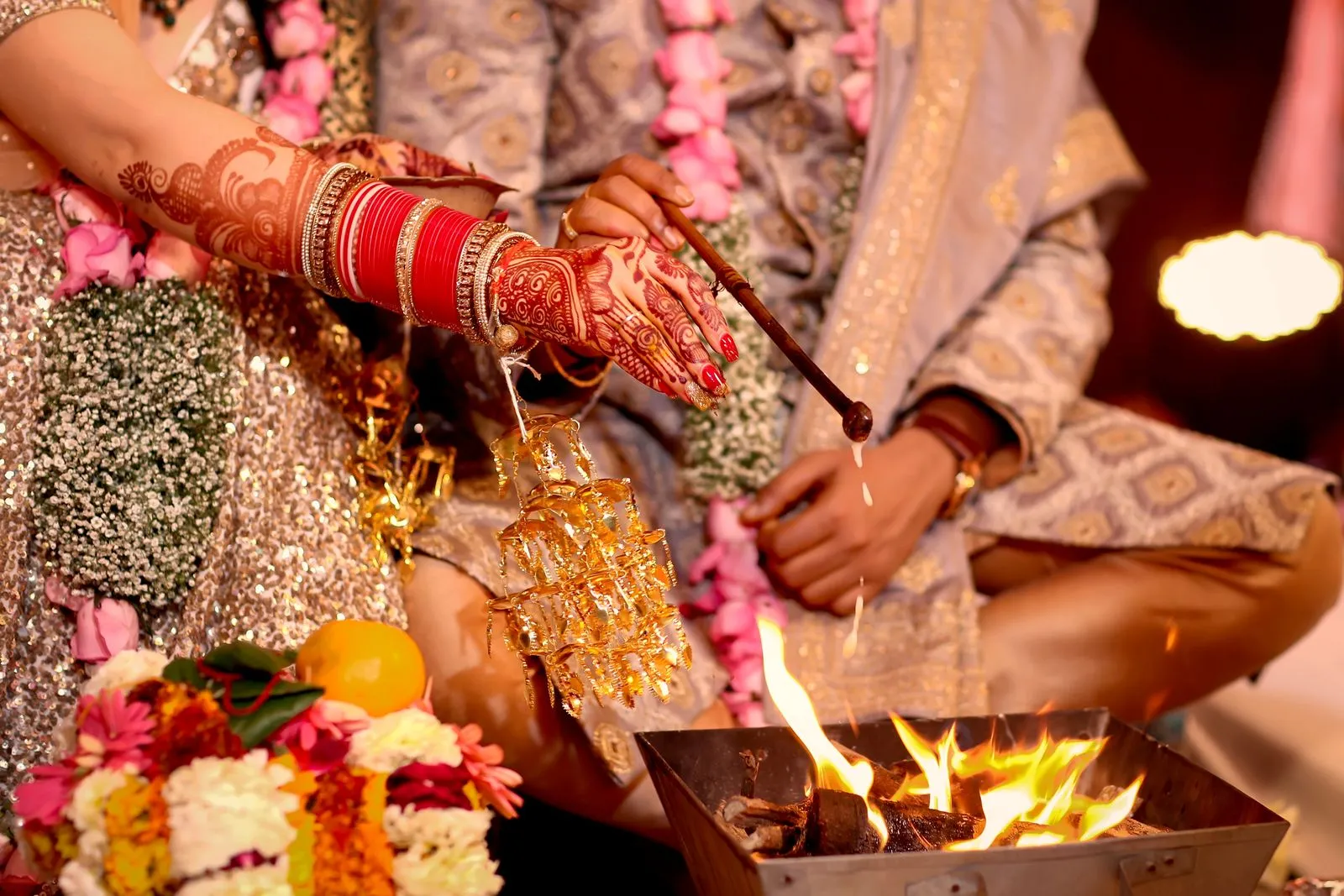
Hindu Wedding Rituals Step by Step, in Order
A Hindu wedding is a string of rituals, each with its own people, things and time. Here they are in order, as a family plans them.
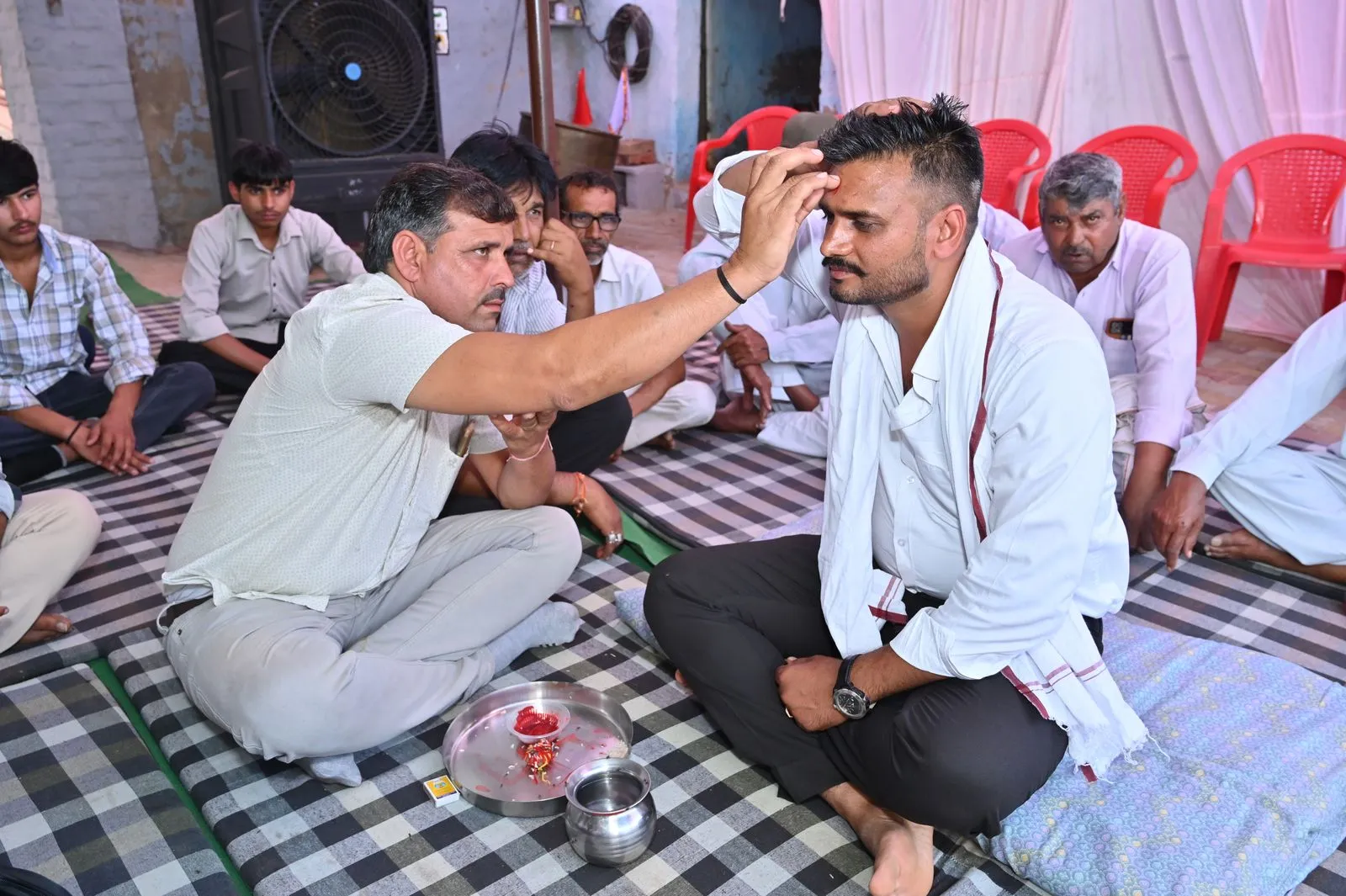
Tilak Ceremony: Meaning, Rituals and Items
The tilak is the visit that seals the match: the bride's family marks the groom's forehead and blesses him. Here's what it means and how it's done.
Joota Chupai: The Rasam and How It's Played
Joota chupai is the game where the bride's sisters hide the groom's shoes. Here's when it's played, how, and how to keep the bargaining friendly.